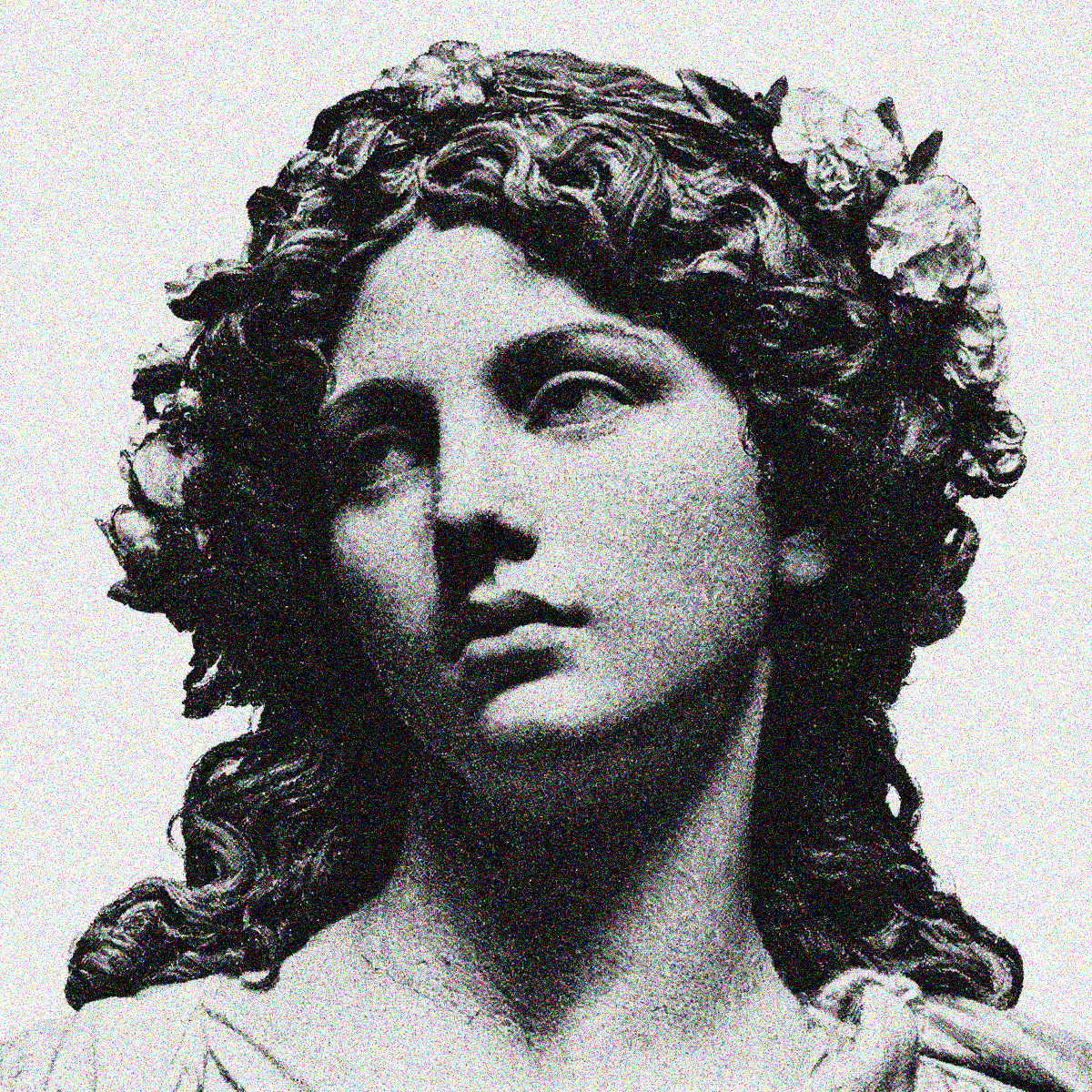
A monochrome is a picture made in a single colour, usually working through its full range from light to dark — or, by extension, a picture that restricts itself so severely to one hue that everything else reads as variation within it.
A monochrome is not necessarily black-and-white; a brown ink drawing, a blue painting in many shades of blue, a green tonal study are all monochromes. The interest of a monochrome is that, with hue removed as a variable, all the work falls onto value, mark, edge, and surface. Description of monochrome attends closely to how the single colour is modulated — where it goes lightest, where it concentrates, how the field is paced. The term has a separate, modernist sense (Klein’s IKB blue, Reinhardt’s blacks), where the monochrome becomes a near-uniform field; the broader descriptive sense covers any single-hue picture.